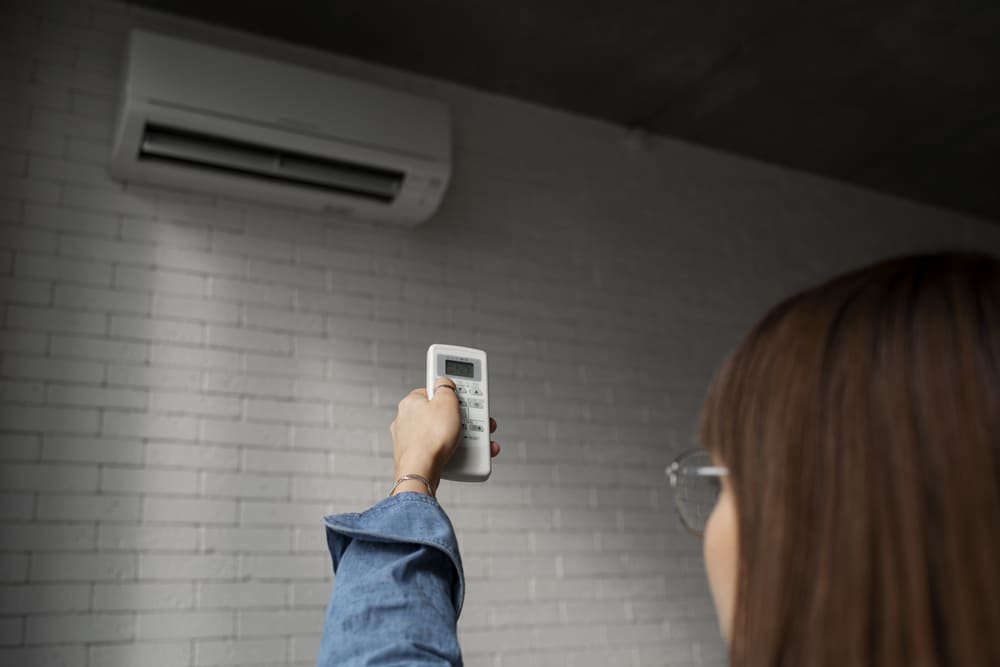
Air-conditioners are a lifesaver in Malaysia’s hot and humid weather, but they also come with a cost. For many households, they are the single biggest reason electricity bills climb higher than expected, especially when cooling runs longer during scorching months.
The good news is that the energy saving air conditioner works best when paired with smarter usage habits and TNB tariff schemes, creating a balance between staying cool and managing electricity bills.
Before diving into the solutions, it’s important to first understand how much your air-conditioner actually contributes to your electricity bill.
Key Takeaways
- Pay attention to your air conditioner electricity cost and take control before bills climb higher.
- Apply smart energy saving tips like setting 24–26°C and using timers to cut monthly costs.
- Make the most of TNB tariff schemes by shifting AC use to off-peak hours for bigger savings.
- Choose recommended energy saving aircon models from Daikin, Midea, and Hisense to enjoy long-term comfort and efficiency.
Why Air Conditioner Electricity Cost Matters Most
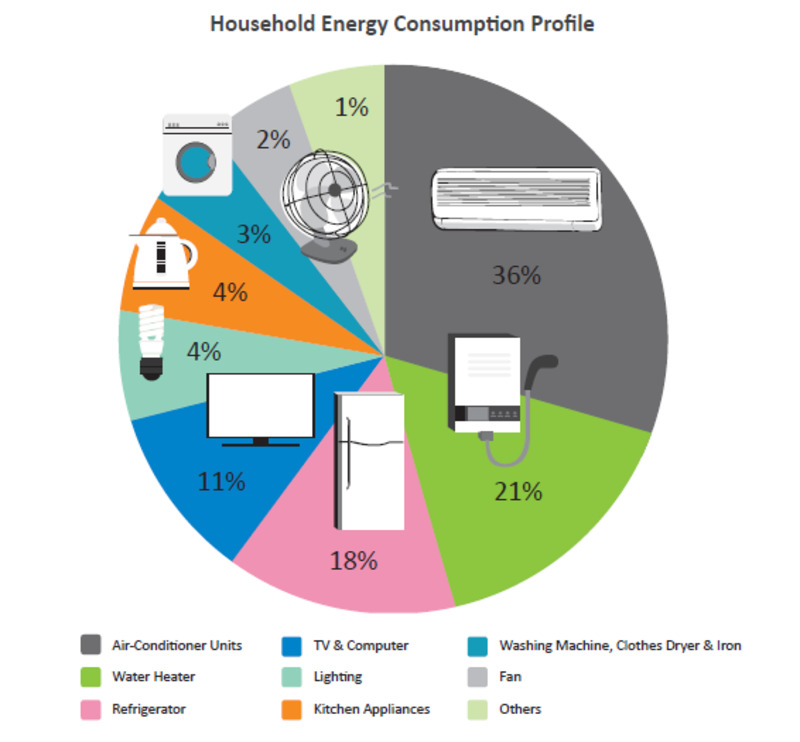
Air-conditioners are the biggest reason electricity bills shoot up.
A single 1HP unit running long hours can add RM50–100 each month. With two or three units, that number climbs fast.
TNB’s residential tariff makes this even more important. The more electricity you use, the higher the rate per kWh. Once usage passes 1,500 kWh, you pay at the top block and AC consumption is often what pushes households into that range.
| Star
Rating |
Energy Efficiency Ratio (EER) | Power Consumption for 1.5 Ton AC (Watts) | Estimated Monthly Cost (RM) |
|---|---|---|---|
| 3 Star | 2.9 – 3.09 | 1104 | 168 |
| 4 Star | 3.1 – 3.29 | 970 | 151 |
| 5 Star | 3.3 and above | 840 | 130 |
Estimated monthly cost for AC by star rating* (Source: Air Conditioner Clarity)
*Note: These amounts are estimates. Actual monthly costs may vary depending on your air-conditioner’s horsepower, how long it runs each day, and TNB’s current tariff rates.
Knowing how much cooling really costs is the first step. Next, let’s look at how to make your air-conditioner work smarter, not harder.
Slash Your Bills with These Air-Conditioner Energy Saving Tips
You don’t need to give up cooling to see real savings for your air conditioning electricity bill. With a few smart adjustments, you can cut down on costs while keeping your home comfortable.
| Strategy | How It Helps You Save | Estimated Savings* |
|---|---|---|
| Choose inverter models | Uses 30–60% less energy by adjusting cooling power automatically. | Up to RM50–80/month |
| Set temperature at 24–26°C | Every degree higher cuts about 3% of cooling cost. | Around RM10–20/month |
| Use dry mode | Handles humidity with lower energy than full cooling. | Around RM10–15/month |
| Clean filters & service regularly | Keeps AC efficient and avoids overworking. | Around RM10/month |
| Use Timers & or smart controls | Prevents AC from running longer than needed. | Around RM20–40/month |
| Block out heat | Curtains, blinds, or window films reduce sunlight and heat. | Around RM10–25/month |
| Pair with fans | Circulates cool air, so you can set the AC higher. | Around RM15–30/month |
| Improve insulation | Keeps cool air in, reducing cooling hours. | Around RM20–40/month |
| Track usage with myTNB | Helps adjust habits before bills climb. | Savings vary by usage |
*Note: Savings are estimates and may differ based on AC horsepower, usage hours, and TNB tariff rates.
Learn how to set up your universal remote aircond the right way and how often should your aircond be serviced with CHANCE’s AC maintenance service.
Pay Less for Cooling with TNB Tariff Schemes
The real difference in the electricity bills shows up when you know how to use TNB’s tariff schemes to your advantage. These options give homeowners a smarter way to manage cooling costs:
1. Time-of-Use (ToU) – Residential
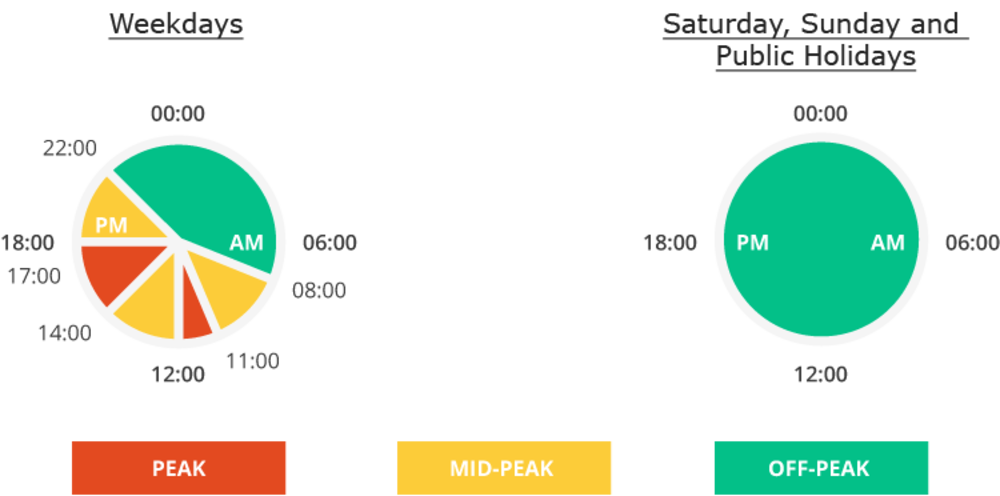
For homes with smart meters, TNB charges different rates depending on the time of day.
Electricity is more expensive during peak hours (weekdays, 2 PM–10 PM), but much cheaper during off-peak hours (10 PM–2 PM the next day, weekends, and public holidays).
2. Standard Residential Tariff (Domestic Tariff A)
If your home isn’t on the ToU plan, you’ll be on the standard block tariff. The more electricity you use, the higher the rate you pay per unit.
Air-conditioners are often the reason households cross into the higher blocks (above 1,500 kWh).
Cutting down on cooling hours or pairing the AC with a fan can help keep your usage within the cheaper blocks.
Get updated with TNB’s latest tariffs to help you save electricity bills.
3. Smart Meters and the myTNB App
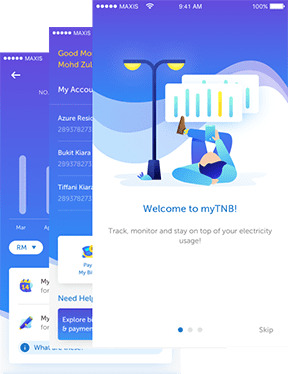
Smart meters are a game changer for households. They let you see exactly how much energy you’re using in real time through the myTNB app.
You can set budgets, receive alerts when consumption spikes, and identify whether your air-conditioner is the main driver of your bills. This makes it easier to adjust habits before the bill arrives.
Looking for the best air conditioner in Malaysia or the cheapest air conditioner in Malaysia that still saves on electricity bills? Explore our full range and learn more today.
How Malaysians Cut Their AC Bills
Sometimes the simplest changes make the biggest difference.

Before: Mohd Ezairol’s bill used to climb well over RM250 a month when his AC ran day and night. After: By limiting usage to after 10 PM (TNB off-peak hours) and relying on fans during the day, he kept his bill under RM180. |

Before: A young family in PJ often set their AC to 21–22°C, which caused their monthly bill to rise above RM300. After: They adjusted the setting to 25°C and paired it with a ceiling fan, bringing their bill down significantly. |
Small adjustments in timing and temperature can make a noticeable difference in your monthly bill, without sacrificing cool air at home.
CHANCE’s Recommended Low Power Consumption of Air Conditioners in Malaysia
It often comes down to the model you choose that saves your electricity bills.
Today’s energy saving air conditioners are designed to cool efficiently and run smarter with advanced features that cut down on unnecessary power use.
| Energy Saving Aircon Model | Daikin Bluvi Series | Hisense TUGS Series | Midea Xtreme Save Inverter |
|---|---|---|---|
| Key Features | High CSPF rating, R32 refrigerant, ECO mode, 3D airflow, quiet operation. | High CSPF, R32 refrigerant, quiet mode, plasma generator, multiple filters, fast cooling, “I Feel” smart sensor. | Gear Mode for adjustable power, Fast Cooling, energy monitoring, R32 refrigerant. |
| Energy Saving Highlights | Saves up to 58% more energy compared to non-inverter models. Great for consistent, comfortable cooling. | Combines efficient cooling with clean air features for healthier living. | Optimises power consumption while maintaining comfort. An affordable choice for energy-conscious homes. |
| Warranty & Protection | 2+1 years general warranty (extended) + 5 years compressor warranty for inverter aircon models. |
|
Typically offers 1-year general warranty + 5 years compressor warranty (varies by dealer). |
Stay Cool, Save More with CHANCE
Cutting electricity bills starts with smart choices. An energy saving air conditioner, paired with the right usage habits and awareness of TNB tariff schemes, can make a big difference in monthly costs.
CHANCE, a reliable aircond specialist in Malaysia, provides installation and servicing that keep your home cool while helping you save more.
Contact CHANCE today to find out more about energy-saving aircons and professional servicing.