
Hospitality & Leisure
A Cigar Lounge Where the Cooling and the Humidor Want Opposite Things
Comfort cooling dehumidifies as a side effect. In a cigar lounge that side effect destroys the product — so the humidor needed its own climate, metres from the one fighting it.
Client
A members' cigar lounge in the Klang Valley, delivered as HVAC contractor to the project's appointed renovation contractor.
Challenge
A cigar lounge has to hold two incompatible climates inside one tenancy, and they sit metres apart.
The guest areas want ordinary comfort cooling. The humidor wants roughly 70% relative humidity held steady at cellar temperature. Those are not merely different targets — they are opposed ones, because dehumidification is not a feature of comfort cooling that can be switched off. It is a by-product of how the equipment works: a refrigerant coil running below the air's dew point condenses moisture out of every cubic metre it touches. The system that makes the room pleasant for guests is the same system that dries out the stock.
The tolerance either side is narrow. Let a cigar sit too dry and the wrapper shrinks, splits and the cigar is unsellable. Let it sit too damp and the risk becomes mould and tobacco beetle. Neither failure announces itself on the day it starts.
Two things made it harder. The humidor is small — 27 m³ — and small volumes swing fast, so an error that a large room would absorb over hours shows up here in minutes. And it has a door that opens all evening onto Malaysian ambient air, which is warm and frequently above 80% RH. So the room has to be defended in both directions: humidified when the cooling pulls it dry, dehumidified when the door lets the outside in.
Solution
The comfort side was zoned by function rather than sized across the floor area. The main hall took five 5.0HP ceiling cassettes at 42,000 Btu/hr each, carrying the crowd load and the ceiling height. Each cigar room and the VIP room were given their own units — 2.5HP at 20,500 Btu/hr, and 3.0HP at 24,200 Btu/hr for the larger of them — specifically so each room could hold its own setpoint instead of inheriting the hall's. Stores were served by wall-mounted units where a cassette was not appropriate.
That zoning is what makes the humidor solvable at all. A room cannot be given its own climate if it shares a thermostat with the space next door.
The humidity scope followed as a separate phase. The humidor received both humidification and dehumidification — both, because in this climate the room has to be pushed back toward the middle from either side — under a dedicated control panel with its own temperature control, so the room runs on its own loop rather than as a slave to the venue's comfort system.
A dewpoint air curtain was fitted at the door. It does not seal the room, but it substantially cuts the volume of ambient air exchanged each time the door opens, which is where a small humidor loses control fastest.
Execution
The comfort installation was delivered first, in July 2025: twelve indoor units across main hall, cigar rooms, VIP room and stores, with installation, copper runs, insulated condensate drainage and commissioning.
CASS returned in October 2025 for the humidity scope — the control panel, the humidification and dehumidification plant for the 27 m³ room, the air curtain, and an additional wall-mounted unit with 20ft of insulated copper, tested and commissioned.
Evidence
- Twelve indoor units zoned by room function, not averaged across floor area
- Independent setpoint per cigar room and VIP room — the precondition for controlling the humidor at all
- Humidification and dehumidification on the same 27 m³ room, controlled together
- Dedicated control panel with temperature control, separate from the venue's comfort system
- Air curtain at the humidor door to limit ambient exchange
- Two phases, July and October 2025
- Daikin equipment throughout the comfort scope, as authorised dealer
Documented project detail
Scope verified against the project's order documentation, July and October 2025. 🚫 Commercial terms withheld.
- 5 × Daikin 5.0HP SkyAir inverter ceiling cassette (FCFC125A/RZFC125A-3CKY-LF, 42,000 Btu/hr) — main hall
- 4 × Daikin 2.5HP SkyAir inverter ceiling cassette (FCFC60A/RZFC60A-3CKY-LF, 20,500 Btu/hr) — cigar rooms S1 and S2, VIP room
- 1 × Daikin 3.0HP SkyAir inverter ceiling cassette (FCFC71A/RZFC71A-3CKY-LF, 24,200 Btu/hr) — the larger cigar room
- 3 × Hisense 1.0HP inverter wall-mounted (AI10TUGS1, 9,500 Btu/hr) — stores, and one added in the second phase
- Humidification and dehumidification plant sized for a 27 m³ room
- Dedicated control panel with temperature control, so the humidor runs independently of the venue
- Daikin dewpoint air curtain, 3ft (DAC308C-ACAA), at the humidor door
- 20ft additional insulated copper (1/4" and 3/8") in the second phase, tested and commissioned
Outcome
A humidor that runs on its own control loop, with humidification, dehumidification and temperature held independently of the comfort cooling a few metres away — and guest areas zoned so each room holds its own setpoint rather than the whole floor's.
On site
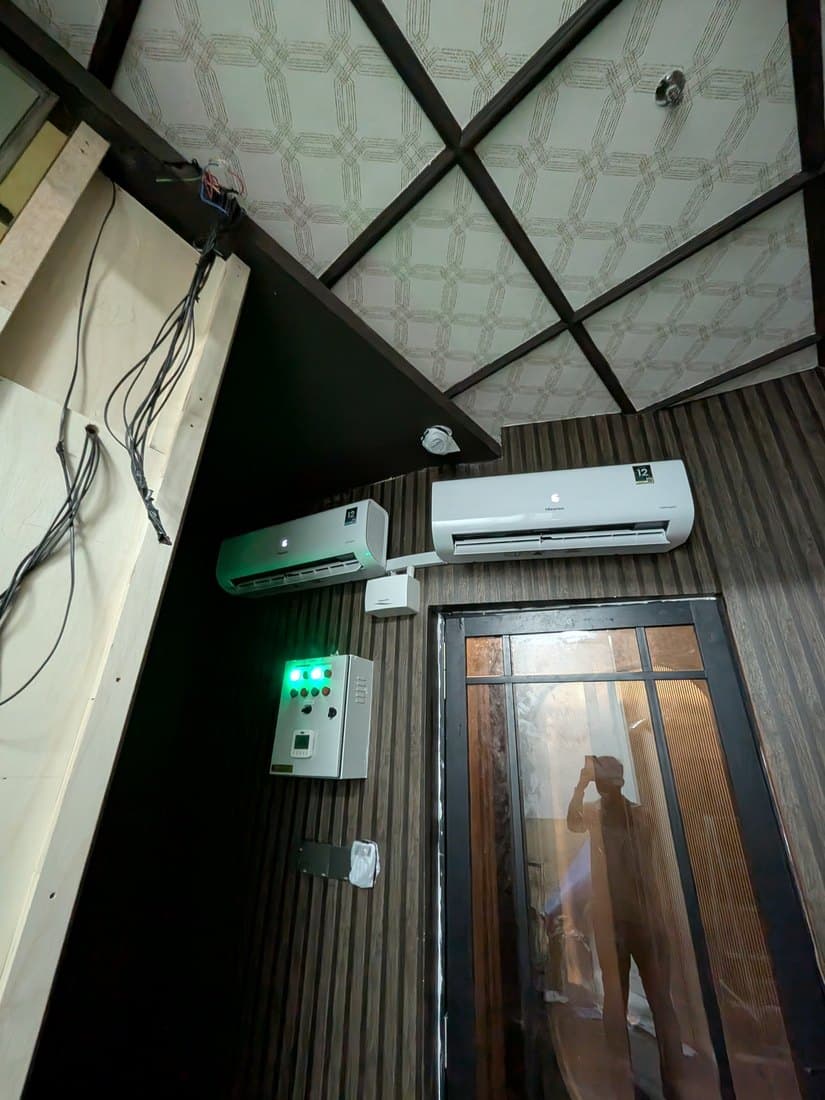
The humidor's own unit and control gear — a second climate, metres from the first 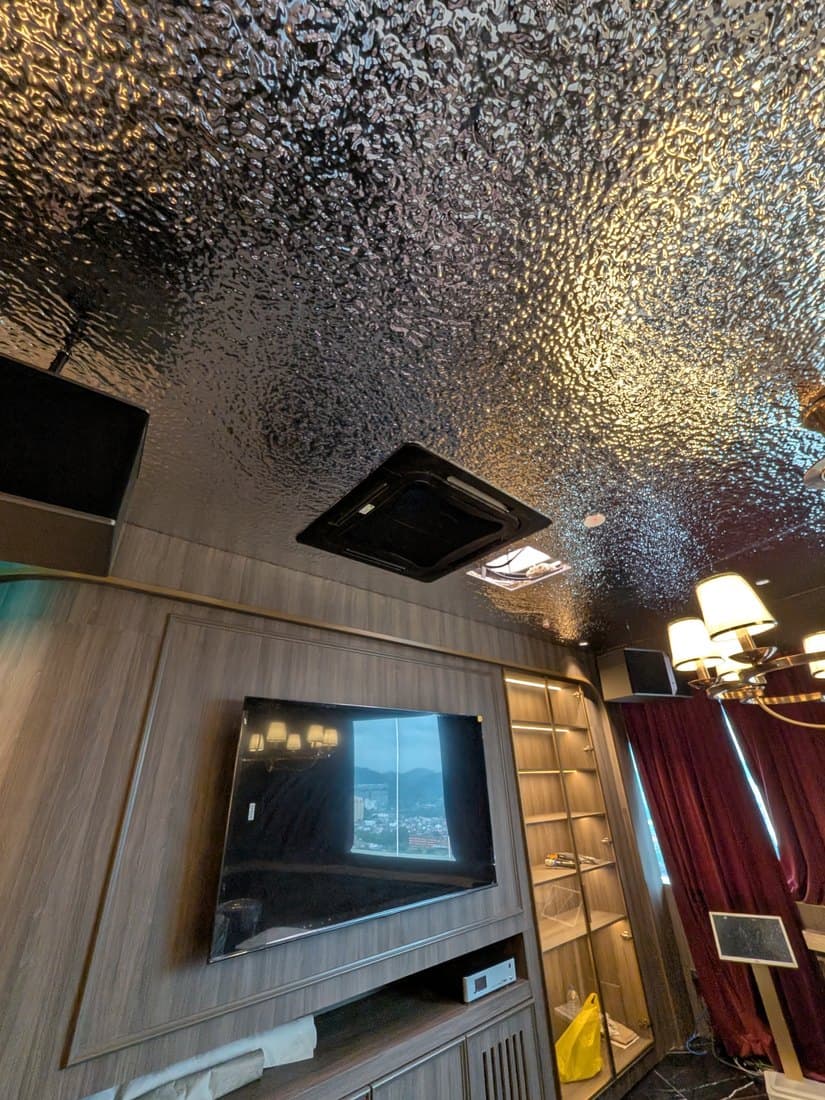
Cassette set into the lounge's finished ceiling 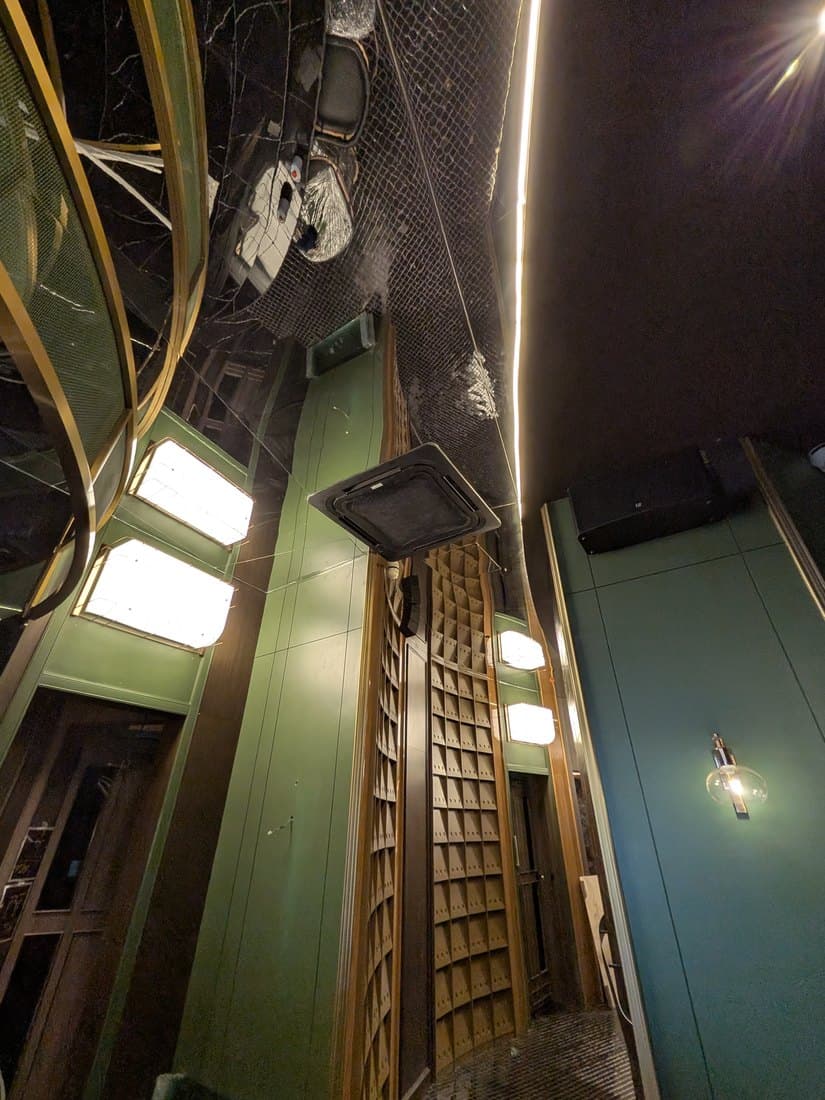
Placement worked around the cove lighting and joinery 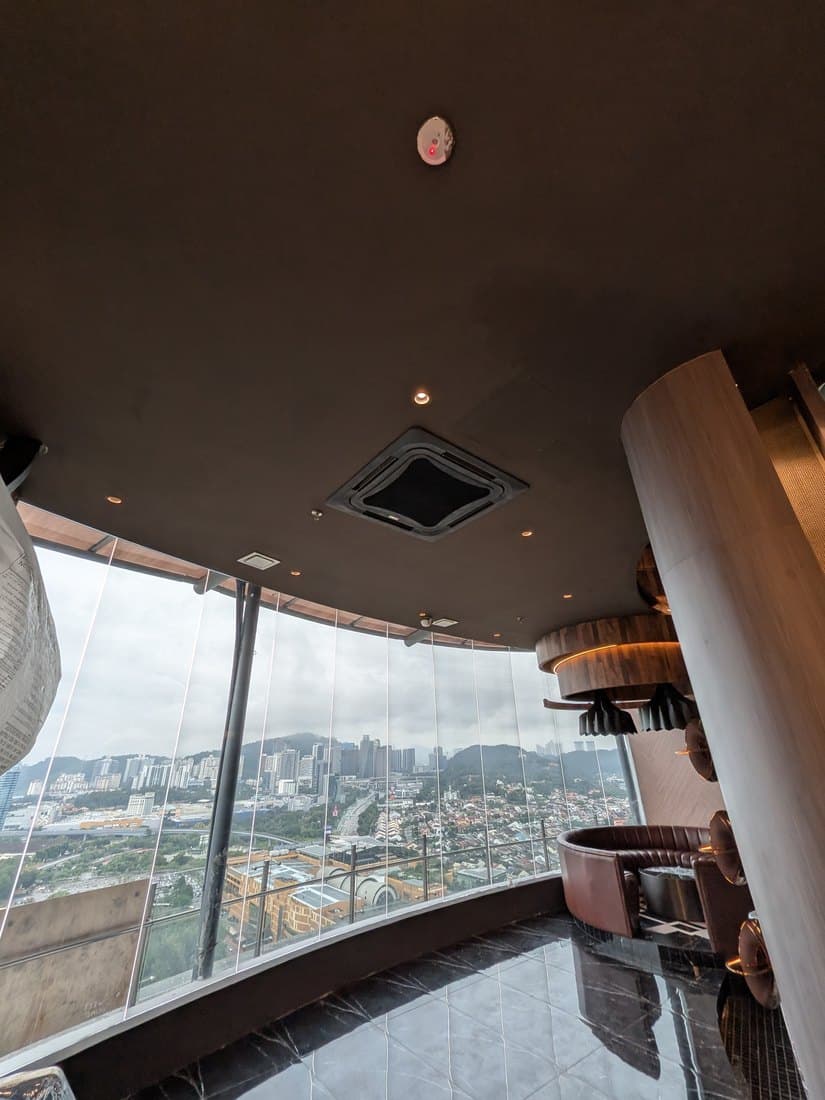
The comfort-cooled lounge side of the tenancy
This project was delivered under HVAC Design & Build.
Have a similar requirement?
Tell us the building, the scope and the timeline, and you will reach the team that handles this kind of work.
→ wa.me/60175259585 (Gwen, Design & Build)